
Moving Your Office Without Losing a Day of Business

Moving Your Office Without Losing a Day of Business
A commercial move has a different set of stakes than a residential one — every hour of downtime has a cost attached, and the logistics involve more moving parts: IT infrastructure, employee schedules, and often a building management team on both ends. Here's how to plan a move that doesn't interrupt operations any more than necessary.
Start With a Realistic Timeline
Most office moves benefit from a phased approach rather than a single all-at-once weekend. Non-essential items (archived files, decor, break room equipment) can move days ahead of the core operational move, leaving only workstations, servers, and daily-use equipment for the tightest window.

Loop in IT Early
Disconnecting and reconnecting servers, networking equipment, and workstations is one of the highest-risk parts of an office move. Decide early whether your internal IT team or the moving company (or both) will handle equipment disconnection, and get any critical systems backed up before moving day regardless of who handles the physical move.
Get Certificates of Insurance Sorted Early
Most commercial buildings require a Certificate of Insurance (COI) from any vendor, including movers, before they're allowed on-site — often with specific coverage minimums. Request this from your moving company as soon as you have a date, since building management can take days to process it.
Communicate the Plan to Your Team
A short internal memo covering the move date, what employees need to pack themselves (personal items, sensitive documents) versus what the movers will handle, and where to report on move day prevents a lot of day-of confusion.
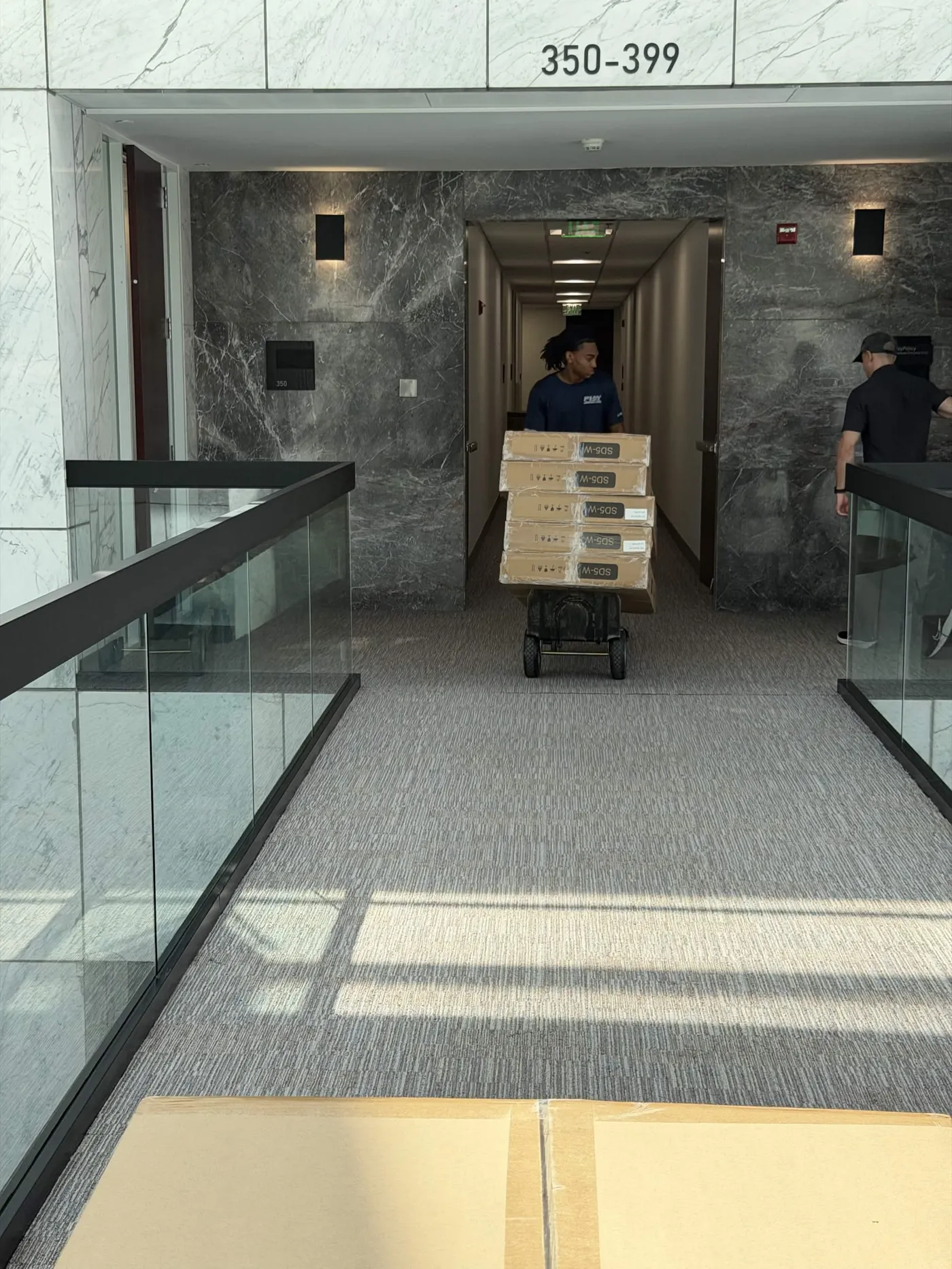
Schedule Around Your Slowest Business Hours
If your business has natural lulls — a slow afternoon, a weekend, between fiscal periods — timing the move there minimizes the operational hit even if it means a slightly less convenient hour for the move itself.
Confirm Building Access on Both Ends
Loading dock reservations, freight elevator availability, and building hours often differ between your old and new location. Confirm both separately rather than assuming they match.
Frequently Asked Questions
How far in advance should I book a commercial move? Commercial moves generally benefit from more lead time than residential moves — a few weeks at minimum — to allow time for COI paperwork, IT planning, and building coordination on both ends.
Do commercial movers handle IT equipment? Many do, though it's worth confirming what's included. Some businesses prefer their own IT team handle server and network disconnection while movers handle the physical transport.
What is a Certificate of Insurance and why do I need one for an office move? A COI is documentation of a vendor's insurance coverage, and most commercial buildings require it before allowing any vendor — including movers — on-site. Request it as soon as your date is set.
Is commercial moving priced differently than residential? Commercial moves are often quoted by scope rather than a flat hourly rate, since the equipment, timeline, and access logistics vary more than a typical home move.
Can an office move happen over a weekend to avoid downtime? Yes, and it's common — moving outside business hours or over a weekend is one of the most effective ways to minimize operational disruption.
Planning a Commercial Move?
Playhouse Moving handles commercial relocations across Austin with an emphasis on minimizing downtime and keeping your team informed throughout. Request a free on-site estimate at playhousemoving.com or call (737) 285-5900.