
Upright and spinet pianos
Uprights are padded, strapped to a piano dolly and moved upright with a crew sized to the weight and the path. Stairs and tight turns are planned in advance.
Baby grand pianos
Grands are moved on their side on a piano board with legs and lyre removed and protected. Give us the length of the piano and photos of the doorways.
Stairs, bungalows, and apartment elevators
Older bungalows and central-neighborhood homes can have tight porch turns and narrow doors. A walk-up adds a stair carry. Send photos of the piano and the whole path out, including the entrance, stair landings, and any turn where there is little room to work.
Downtown and mid-rise buildings may need a reserved freight elevator and a certificate of insurance (COI). Get the building's instructions and send them with the photos. If a piano will not fit, we will tell you before we try to force it.
What a piano move actually involves
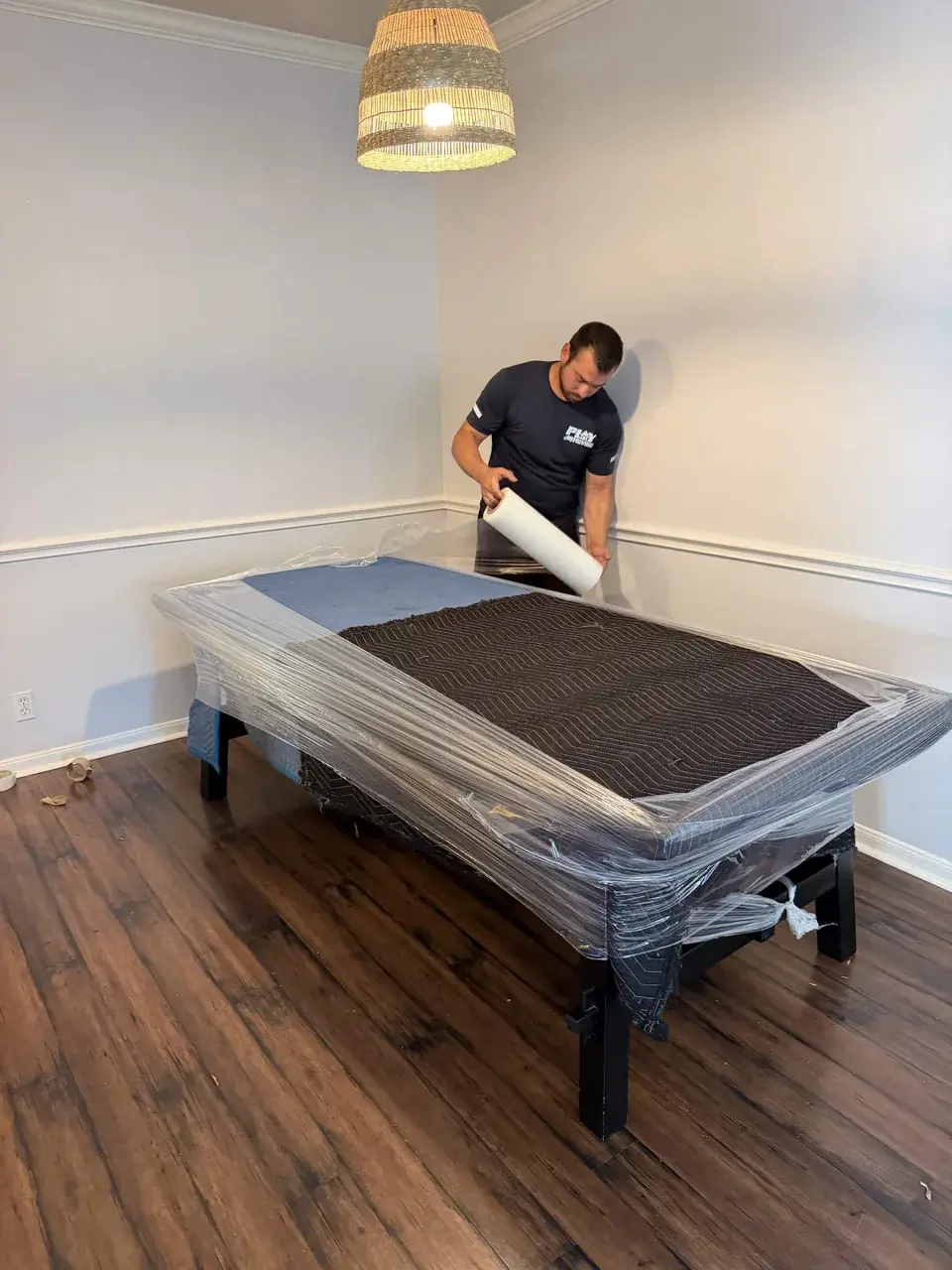
We plan padding, straps, and a crew sized to the weight and the path. Uprights stay upright on a piano dolly. Baby grands go on their side on a piano board with the legs and lyre removed and protected. Stairs and porch turns belong in that plan before the piano starts moving.
The piano can travel with a full household move or as its own small move. Tell us which you need when you call. The work is quoted in writing, not added as a surprise fee at the door. Earlier starts in summer are easier on the instrument, so discuss timing along with access.
After the move
Pianos often need tuning after a move and a few weeks of settling in a new climate. Austin humidity swings make that more noticeable. We recommend booking your tuner a couple of weeks after move day.
Fast, professional and friendly! Outta sight!