
Moving to Cedar Park TX? Everything You Need to Know (2026)
Cedar Park has spent the last decade quietly becoming one of the most sought-after places to live in the entire Austin metro — and the numbers back it up. With a population that has grown more than 58% since 2010, a median household income above $118,000, and a school district ranked among the best in Central Texas, Cedar Park offers something that's getting harder to find in this part of Texas: real value without sacrificing quality of life. If you're weighing a move to Cedar Park, here's everything you need to know before you start packing boxes.
Why People Are Moving to Cedar Park
The pull is straightforward. Cedar Park sits 21 miles northwest of downtown Austin, close enough to access the city's job market and culture while far enough removed to feel like its own place. It borders Leander to the north, is 12 miles west of Round Rock, and sits roughly 10 miles from Lake Travis — which makes it a genuinely convenient hub whether you're commuting south for work or heading out on the weekend.
The city's growth has been matched by investment. Cedar Park has seen an explosion of new retail corridors, restaurant scenes, and entertainment venues in recent years. The H-E-B Center at Cedar Park anchors the city's entertainment district, hosting over 130 events a year and serving as home to the Texas Stars (AHL hockey) and Austin Spurs (NBA G League). For a suburb, Cedar Park has a surprisingly active pulse.
What consistently draws families, specifically, is the combination of space, safety, and schools. The crime rate sits well below both state and national averages, and the Leander Independent School District — which serves most of Cedar Park — is ranked the second-best school district in the Austin area.
Cedar Park Neighborhoods — Where to Live
Cedar Park is a city of distinct neighborhoods, and choosing the right one depends on what you're prioritizing: school zoning, commute access, community amenities, or price point. Here's a look at the areas that come up most often.
Caballo Ranch
One of the most popular family neighborhoods in Cedar Park, Caballo Ranch sits about 24 miles from downtown Austin and feeds entirely into Leander ISD — specifically Parkside Elementary, Stiles Middle School, and Rouse High School, all of which hold A ratings from the Texas Education Agency. The community has a pool, parks, hiking trails along Brushy Creek Lake Park, and sports courts. Homes range from the mid-$300s to mid-$500s, HOA dues run about $100 per quarter, and the tax rate is around 2.4%.
Ranch at Brushy Creek
A well-established neighborhood with access to both Leander ISD and Round Rock ISD schools depending on your exact address — an important note since school zoning in Cedar Park can split within the same neighborhood. Ranch at Brushy Creek is known for mature trees, strong community feel, and proximity to the Brushy Creek Regional Trail system. Home sizes range from roughly 1,500 to 6,000 square feet, with prices spanning the mid-$200s to mid-$500s, making it one of Cedar Park's more accessible options.
Deer Creek
Located about 21 miles from Austin and 20 minutes from Lake Travis, Deer Creek draws residents who want community amenities — pools, parks, playgrounds, and event rental space — paired with easy lake access. Homes here run from the low $300s to the mid-$600s, with 2,000 to 5,100 square feet of living space. Students attend Deer Creek Elementary, Cedar Park Middle School, and Cedar Park High School. Austin Community College's Cypress Creek campus is about 2 miles away.
Twin Creeks
Cedar Park's golf course community, Twin Creeks is the choice for buyers who want larger, custom-quality homes with resort-style amenities. Home sizes reach 6,300 square feet and prices can climb toward $700,000 and above. It's a quieter, more premium slice of Cedar Park — less of a starter neighborhood and more of a long-term landing spot.
Anderson Mill West
A smaller, quieter community near five separate parks and several schools including Cypress Creek Elementary. Anderson Mill West has a neighborhood feel that appeals to families and retirees. Median prices per square foot run around $268, making it one of the more affordable entry points into Cedar Park homeownership. If peace, parks, and walkability to schools are priorities, this one belongs on your shortlist.
Shenandoah
Centrally located in Cedar Park near Lakeline Mall, Route 183, and major retailers, Shenandoah is the practical choice for commuters and residents who want to minimize errand time. Compact homes start under $320,000, making this the most accessible neighborhood in the city for first-time buyers. The tradeoff is less open space compared to master-planned communities, but for a single professional or a young couple, the location convenience is hard to beat.
Cost of Living in Cedar Park
Cedar Park's cost of living is modestly above the national average overall, but the story on housing is more nuanced. As of spring 2026, the median home price in Cedar Park sits around $495,000–$515,000 — which is meaningfully lower than the $650,000+ median in central Austin. That gap translates directly into more square footage, newer construction, and larger lots for the same budget.
For renters, average apartment costs run roughly $1,200 per month for a one-bedroom up to $1,900 for a three-bedroom. Everyday expenses — groceries, transportation, healthcare — are generally on par with or slightly better than the Austin metro average. Texas's lack of a state income tax continues to be a quiet but significant financial advantage for households at all income levels.
One real cost to factor in: the commute. Cedar Park is a car-forward community. The 183A Toll Road is the main artery for getting to Austin efficiently, and average commute times run about 25 minutes — a bit longer than central Austin. Tolls, fuel, and insurance are real line items for Cedar Park residents who commute daily into the city. For those who can work remotely or have jobs along the 183/North Austin corridor, the cost picture is significantly more favorable.
Schools in Cedar Park
The school picture in Cedar Park is genuinely strong, but there's an important nuance: not all Cedar Park addresses feed into the same district. Leander ISD serves the majority of the city and holds the strongest academic reputation in the area — its 97% graduation rate places it in the top 5% of Texas school districts. Cedar Park High School and Vista Ridge High School both earned A ratings from the Texas Education Agency for 2025.
Some southern and eastern Cedar Park addresses are served by Round Rock ISD, which is also highly regarded. The key is verifying your specific address before buying, since school zones can split within the same neighborhood and boundaries are updated periodically. Leander ISD's School Zone Finder is the official verification tool, and the district specifically advises against relying on neighborhood maps alone for purchase decisions.
For higher education, Austin Community College's Cypress Creek campus sits within Cedar Park and has expanded significantly to serve the growing population.
Getting Around Cedar Park
Cedar Park is primarily a driving city. About 70% of residents commute by car. The 183A Toll Road and US-183 are the main corridors connecting Cedar Park to Austin, North Austin employers, and the broader metro. Rush hour on I-35 can stretch the downtown Austin commute to 45–60 minutes; taking 183A typically cuts meaningful time off that trip.
For those who want alternatives, Capital Metro's express bus service and the Leander MetroRail station — 5 miles north of Cedar Park — provide a commuter rail connection into downtown Austin. It's not a primary option for most residents, but it exists. If you're commuting specifically to the Domain, the Apple Campus, or North Austin tech employers, Cedar Park's position is particularly convenient, often putting those destinations within 15–20 minutes.
Things to Do in Cedar Park
- H-E-B Center at Cedar Park — 130+ events annually, home of the Texas Stars hockey team and Austin Spurs basketball
- Brushy Creek Regional Trail — over 11 miles of trails connecting parks, green space, and recreation areas across Cedar Park and the Brushy Creek community
- Southwest Williamson County Regional Park — one of the largest parks in the region with sports fields, a disc golf course, and open space
- Lake Travis — 10 miles away and one of the best recreational lakes in Central Texas; watersports, fishing, and sunset views
- Cedar Park Town Center — walkable retail and dining district with local restaurants and shops
- Lakeline Mall area — major retail, dining, and entertainment hub along 183
Tips for Moving to Cedar Park
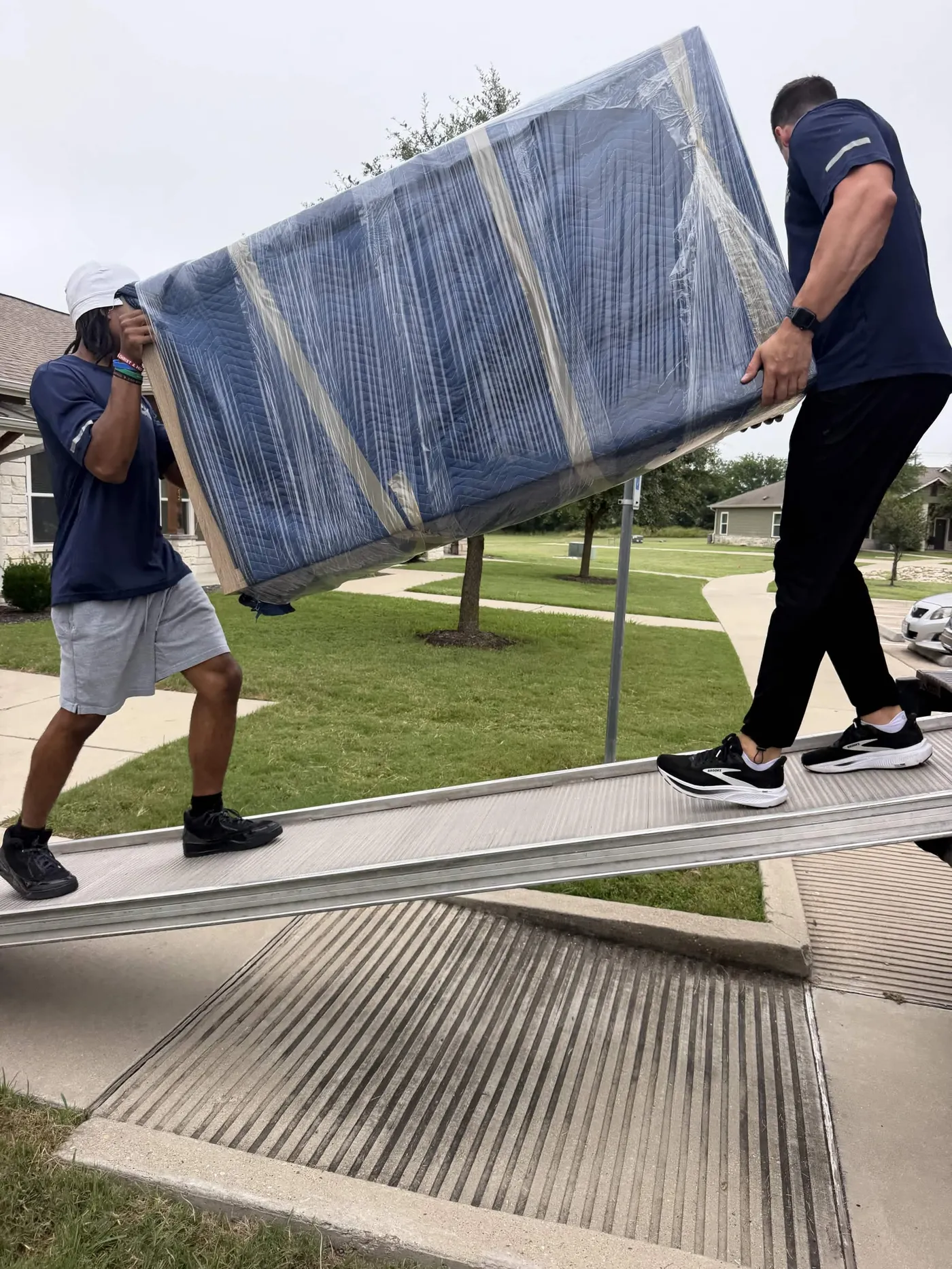
Moving to Cedar Park is genuinely exciting — but the logistics are worth thinking through before the truck shows up.
Summer is peak moving season in the Austin metro, and Cedar Park is no exception. May through August sees the highest demand, the tightest availability, and the most competition for weekend move dates. If your timeline has any flexibility, late fall and early winter typically mean more options and an easier scheduling experience.
Cedar Park's neighborhood roads vary considerably from established areas to newer developments. If you're moving into a master-planned community with specific HOA rules, check on move-in procedures in advance — some require elevator reservations, move-in time windows, or truck access restrictions that affect how the day unfolds.
Finally, verify school zoning from the official district source before your closing date. The Leander ISD and Round Rock ISD websites both have address-level zone finders, and it's worth double-checking rather than relying on a neighborhood name alone.
Frequently Asked Questions About Moving to Cedar Park
Is Cedar Park a good place to live? Cedar Park consistently ranks among the best suburbs in Texas and the country. Strong schools, lower crime than state and national averages, close proximity to Austin, and a range of neighborhoods for different budgets and lifestyles make it a strong choice for families and professionals alike.
How far is Cedar Park from Austin? Cedar Park is approximately 21 miles northwest of downtown Austin. Via the 183A Toll Road, the drive typically takes 25–35 minutes under normal conditions. Rush hour can extend that to 45+ minutes depending on your specific destination in Austin.
Is Cedar Park more affordable than Austin? For housing, yes — significantly. Cedar Park's median home price runs roughly $130,000–$150,000 less than comparable homes in central Austin, and the cost of living overall is lower than the Austin metro average. The tradeoff is a longer commute and more car-dependent daily life.
What school district is Cedar Park in? Most of Cedar Park is served by Leander ISD, which is ranked the second-best school district in the Austin area with a 97% graduation rate. Some southern and eastern Cedar Park addresses are served by Round Rock ISD. Always verify your specific address using the official district zone finders before purchasing.
Who should I hire to move to Cedar Park? Playhouse Moving is a locally owned Austin-area moving company that serves Cedar Park as part of our regular service area. We handle Cedar Park moves every week — we know the neighborhoods, the roads, and how to make your move day run smoothly. Visit playhousemoving.com for a free quote.
Ready to Make the Move to Cedar Park?
Cedar Park checks a lot of boxes — great schools, genuine community feel, more space for your money, and easy access to everything Austin has to offer without the Austin price tag. Getting there doesn't have to be stressful.
Playhouse Moving handles Cedar Park moves every week. Free quotes, transparent hourly pricing, and 5-star service across the entire Austin metro.
Get your free moving quote at playhousemoving.com or call us today.